
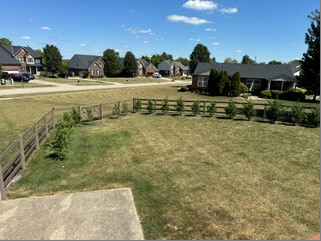
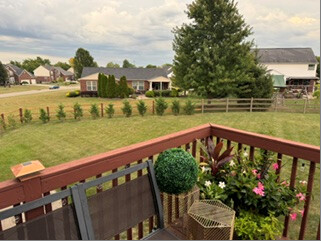
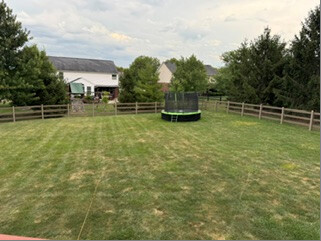
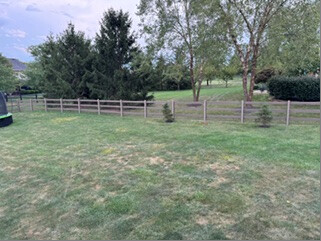
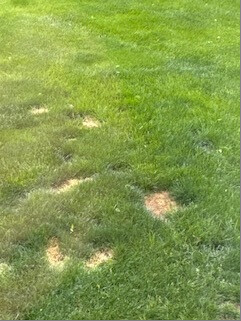
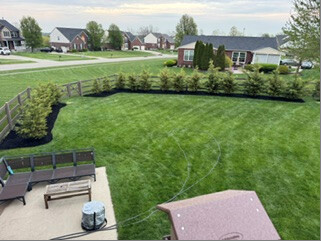
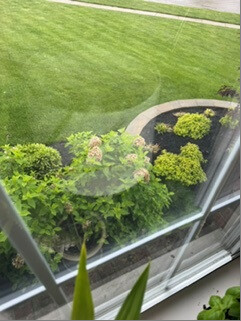

This is the actual 2026 lawn program I used for approximately 15,000 square feet of tall fescue and Kentucky bluegrass in Liberty Township, Ohio.
This guide shares what I used and learned on my lawn in southwest Ohio. Products, lawn conditions, grass types, and local weather vary. Always follow the current product label for rates, watering, reseeding intervals, and instructions for children and pets. Spreader settings are starting points; calibrate your equipment.
Why I built the plan this way
My front and back yards receive partial sun, while the large side yard receives full sun and stays wet and spongy even with French drains. I needed one calendar that kept crabgrass prevention, fertilizer, weed treatment, aeration, overseeding, watering, and mowing from working against one another. I planned around the weather, the different conditions in each part of the yard, and the September renovation window.
What I used
- A lawn map and calendar for approximately 15,000 square feet
- A Scotts Turf Builder EdgeGuard DLX broadcast spreader
- Two 40-pound bags of Lebanon 0.58% prodiamine
- One 50-pound bag of LESCO 24-0-11 fertilizer
- Roundup for Lawns for targeted spring and summer weed treatment
- IMAGE crabgrass and nutsedge weed control for late-summer problem areas
- A rented 19-inch walk-behind core aerator, flags, boots, and protective gear
- Two 50-pound bags of LESCO All Pro Transition Blend turf-type tall fescue seed
- One 42-pound bag of Scotts Turf Builder Starter 24-25-4
- A traveling tractor sprinkler and 250 feet of hose
- One 50-pound bag of Heritage 32-0-4 fertilizer with iron for the final fall feeding
What I did
- I planned the lawn in January and February. I mapped the front, back, and sunny side yard, noted shade, traffic, wet spots, and drainage, and set aside potential weekends. The different zones dry and grow differently, so I did not treat the entire property as though every section had the same needs.
- I applied pre-emergent in late winter or early spring. I checked GreenCast soil temperatures and used Lebanon 0.58% prodiamine with my EdgeGuard DLX at setting 4.5. My record shows that I spread 1.5 of the two 40-pound bags and gave the remaining half bag to a neighbor.
- I completed the spring feeding in mid-to-late May. I used about two-thirds of a 50-pound bag of LESCO 24-0-11. The converted EdgeGuard DLX starting setting was 6, which I treated as a starting point and calibrated for the desired application rate.
- I mowed high from spring through fall. I kept the mower at approximately 3.5 to 4 inches and followed the one-third rule, removing no more than one-third of the grass blade in a single mowing. When the wet side yard left muddy footprints, I waited instead of creating ruts.
- I spot-treated weeds as needed. I used Roundup for Lawns mainly along the fence lines instead of blanket-spraying the lawn. I also chose to skip preventive grub treatment.
- I identified problem weeds separately in late summer. I distinguished crabgrass from johnsongrass in the disturbed drainage area and spot-treated as needed with IMAGE crabgrass and nutsedge weed control. The all-in-one treatment had modest success, reinforcing the need to identify the weed and confirm that the label covers that specific species.
- I core-aerated on September 19, 2026. I used a rented 19-inch walk-behind aerator, cross-aerated in two directions, and left the cores on the lawn. The machine was extremely heavy and difficult to turn at the end of each run, so marking hazards and arranging loading and unloading help were important.
- I overseeded on September 20, 2026. I used two 50-pound bags of LESCO All Pro Transition Blend turf-type tall fescue. I made two perpendicular passes with the EdgeGuard DLX set to 7 and kept the small amount of seed left over for future spot seeding.
- I applied starter fertilizer on September 22, 2026. I used one 42-pound bag of Scotts Turf Builder Starter 24-25-4 with the EdgeGuard DLX set to 5. I broke apart the dry clumps before spreading so the material would not dump unevenly and burn the turf.
- I watered the new seed for the first two to four weeks. I used a traveling tractor sprinkler and 250 feet of hose. I aimed to keep the top one-eighth to one-quarter inch of soil moist, watered lightly as needed, and reduced watering when rainfall supplied enough moisture.
- I scheduled the final fall feeding for about four to six weeks after the starter fertilizer. For the lighter feeding, I will use approximately 23.5 pounds of Heritage 32-0-4 with iron over 15,000 square feet. The EdgeGuard DLX label starting setting is 5; I will calibrate for the desired rate and record the final amount and date after application.
What I learned
- Pre-emergent helps prevent crabgrass before it sprouts, but the label, grass type, application rate, soil temperature, and reseeding interval all matter.
- The spring fertilizer’s nitrogen supports color and growth, while potassium supports normal plant function. Any earlier feeding must be included when deciding the rate.
- Mowing high protects the lawn, and waiting for the wet side yard to firm up prevents ruts.
- Roundup for Lawns is different from nonselective Roundup. The exact lawn-compatible product label and pet re-entry directions matter.
- Moist, firm soil helps an aerator pull plugs; saturated ground can rut or smear.
- Two crossing seed passes gave me more even distribution.
- Starter fertilizer clumps can dump material unevenly and burn turf.
- New seed needs moisture without puddles, erosion, or constantly saturated soil.
- The starter fertilizer counts toward the fall nitrogen total. I did not automatically stack a full fertilizer application on top of it.
Know your limits
I would bring in professional help for drainage reconstruction, pesticide work outside the label, severe disease, or equipment that cannot be operated safely on the property.